



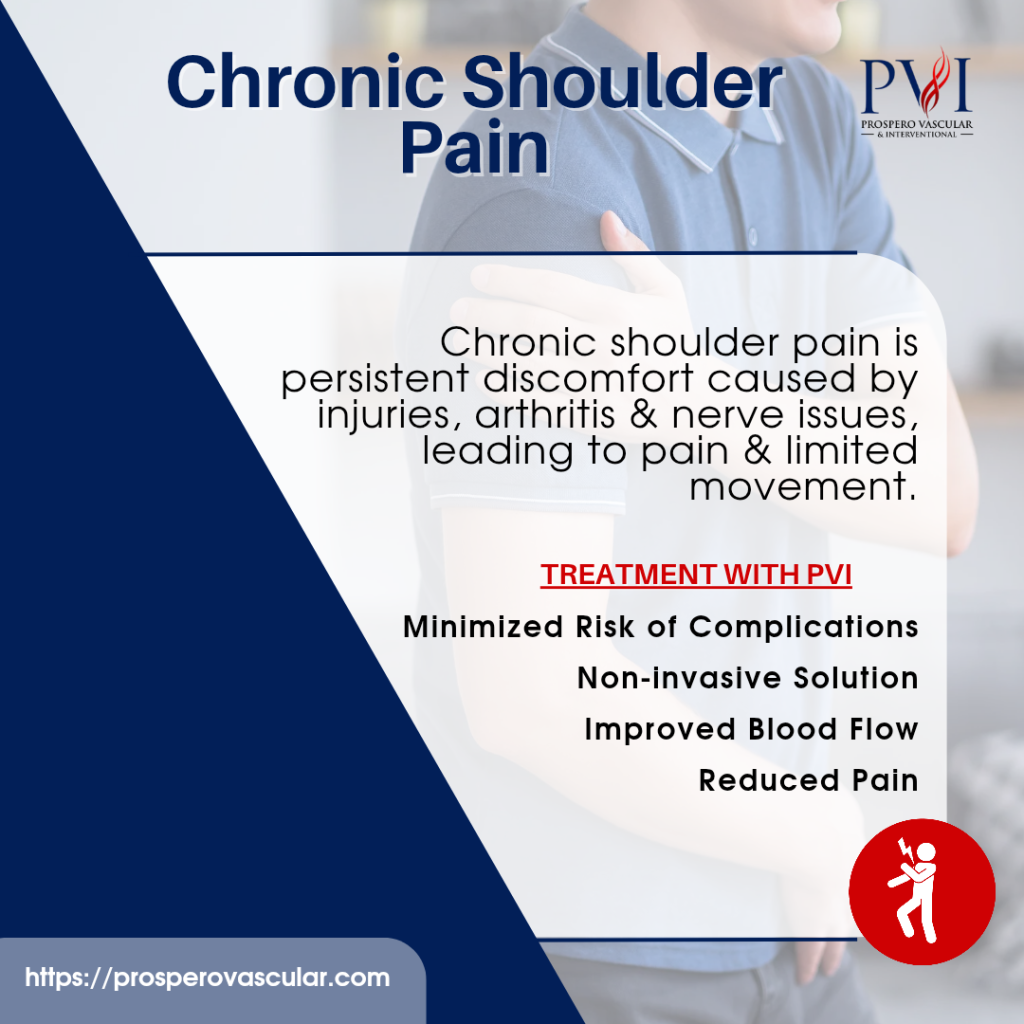
Chronic shoulder pain is persistent discomfort, stiffness, or inflammation in the shoulder joint that lasts for weeks, months, or even years. It can be caused by injuries, arthritis, overuse, or degenerative conditions affecting the bones, tendons, ligaments, or muscles. Since the shoulder is a highly mobile joint, chronic pain can significantly impact daily activities and range of motion.
Treatment options include lifestyle modifications, physical therapy, medications, interventional radiology (IR) procedures, and surgery, depending on the severity and underlying cause.
We offer comprehensive Chronic Shoulder pain treatment options. Call Today to schedule a consultation!
Causes & Risk Factors
Common Causes of Chronic Shoulder Pain:
- Rotator Cuff Injuries – Tears or inflammation in the tendons of the shoulder.
- Frozen Shoulder (Adhesive Capsulitis) – Stiffness and reduced mobility due to thickened joint tissues.
- Osteoarthritis (OA) – Degenerative wear and tear of the shoulder joint.
- Rheumatoid Arthritis (RA) – Autoimmune inflammation that affects the shoulder joint.
- Bursitis – Inflammation of the fluid-filled sacs (bursae) that cushion the joint.
- Tendonitis – Overuse-related inflammation of the shoulder tendons.
- Shoulder Impingement Syndrome – Compression of the rotator cuff tendons.
- Labral Tears – Cartilage damage inside the shoulder joint.
- Fractures or Dislocations – Previous shoulder injuries may lead to long-term pain.artilage damage inside the shoulder joint.
Risk Factors for Chronic Shoulder Pain:
- Age – More common in adults over 40 due to joint degeneration.
- Repetitive Movements – Sports or occupations that require repetitive overhead motions (e.g., baseball, painting).
- Previous Shoulder Injuries – A history of dislocations, fractures, or sprains increases risk.
- Poor Posture – Can contribute to shoulder instability and pain.
- Diabetes – Increases the risk of frozen shoulder.
Symptoms of Chronic Shoulder Pain
- Persistent shoulder pain – Ranging from dull aching to sharp pain.
- Stiffness and limited range of motion – Difficulty lifting or rotating the arm.
- Pain that worsens with activity – Especially overhead movements or lifting objects.
- Weakness in the arm or shoulder – Can make lifting objects difficult.
- Clicking, popping, or grinding sounds – Could indicate cartilage damage.
- Pain that radiates to the neck or arm – Can be a sign of nerve involvement.
Diagnosis of Chronic Shoulder Pain
Doctors use various tests to diagnose shoulder pain:
- Medical History & Physical Examination – Evaluates pain patterns and shoulder mobility.
- X-rays – Identifies bone issues, arthritis, or fractures.
- MRI or CT Scans – Detects soft tissue injuries (tendons, ligaments, cartilage).
- Ultrasound – Examines rotator cuff and bursa inflammation.
- Arthrogram – Uses contrast dye to assess joint structures.
- Blood Tests – Rules out rheumatoid arthritis or infections.w rate.
Living With Chronic Shoulder Pain
Managing persistent shoulder pain effectively can improve daily function and reduce discomfort.
Daily Management Tips:
- Follow a Regular Exercise Routine – Strengthen the shoulder and improve flexibility.
- Modify Sleeping Position – Avoid sleeping on the painful side to prevent pressure.
- Use Ergonomic Adjustments – Ensure proper workstation setup to reduce strain.
- Monitor Symptoms – Keep track of pain levels and seek medical advice if they worsen.
Mental & Emotional Well-being:
- Stay Active – Find activities that minimize pain while keeping mobility.
- Join Support Groups – Talking to others with similar conditions can provide motivation.
Treatment Options for Chronic Shoulder Pain
- Lifestyle changes:
Rest & Activity Modification – Avoid repetitive overhead activities that worsen pain.
Apply Heat & Cold Therapy – Ice helps with inflammation, while heat relieves stiffness.
Improve Posture – Maintaining good posture reduces strain on the shoulder joint.
Use Shoulder Braces or Supports – Provides stability and limits excessive movement. - Physical Therapy & Strengthening Exercises:
Stretching & Mobility Exercises – Helps improve flexibility and range of motion.
Strength Training – Strengthens shoulder and back muscles to support the joint.
Aquatic Therapy – Water-based exercises reduce joint stress while improving mobility. - Medications for Chronic Shoulder Pain:
Non-Steroidal Anti-Inflammatory Drugs (NSAIDs) – Ibuprofen or naproxen to reduce pain and swelling.
Acetaminophen (Tylenol) – Helps with mild to moderate pain.
Corticosteroid Injections – Provides temporary relief from severe inflammation.
Hyaluronic Acid Injections – May help lubricate the joint in osteoarthritis cases. - Minimally Invasive Procedures:
Platelet-Rich Plasma (PRP) Therapy – Uses the body’s own healing factors to repair shoulder tissue.
Viscosupplementation (Hyaluronic Acid Injections) – Helps lubricate the joint and reduce pain. - Surgical Options for Severe Chronic Shoulder Pain:
Arthroscopic Surgery – Removes damaged tissue, repairs torn tendons or ligaments.
Shoulder Replacement Surgery – For severe arthritis or irreparable damage.
Interventional Radiology for Chronic Shoulder Pain
Interventional Radiology (IR) offers non-surgical, minimally invasive treatments for managing persistent shoulder pain.
- Embolization Therapy – Blocks tiny blood vessels to reduce inflammation and pain.
- Radiofrequency Ablation (RFA) – Uses heat energy to disrupt pain signals from shoulder nerves.
- Image-Guided Corticosteroid Injections – Provides targeted pain relief using ultrasound or fluoroscopy guidance.
Benefits of IR Procedures for Shoulder Pain:
- Minimally invasive – No major surgery required.
- Short recovery time – Patients can return to daily activities quickly.
- Effective for osteoarthritis, tendonitis, and impingement syndrome.
FAQ: Common Chronic Shoulder Pain Questions
Can chronic shoulder pain heal on its own?
Some conditions, like mild tendonitis, may improve with rest and therapy. However, others (like arthritis or rotator cuff tears) require long-term management.
What is the best exercise for chronic shoulder pain?
Gentle shoulder stretches, rotator cuff strengthening, and resistance band exercises can help. Avoid high-impact or overhead activities if they worsen pain.
When should I see a doctor for shoulder pain?
Seek medical attention if pain lasts more than a few weeks, worsens over time, causes weakness, or limits mobility.
Is surgery always needed for Persistent shoulder pain?
No, most cases are managed with physical therapy, medications, or minimally invasive treatments like PRP or embolization before considering surgery.
Can diet help with shoulder pain?
Yes! A diet rich in anti-inflammatory foods like omega-3s, turmeric, nuts, and leafy greens can help reduce joint pain.
Why Choose Prospero?
Exceptional patient-centered care, innovative treatments, and a focus on quick recovery without surgery.
- Experienced Interventional Specialists: Our skilled team offers advanced, image-guided procedures for vascular and non-vascular conditions.
- Minimally Invasive Treatments: We focus on outpatient solutions that reduce recovery time, often allowing for same or next-day recovery.
- Comprehensive & Compassionate Care: We take a patient-centered approach, ensuring comfort, safety, and optimal outcomes.
- Flexible & Same-Day Appointments: Prioritize your health without long wait times.

Latest Articles about Chronic Shoulder Pain

Chronic Joint Pain
If you’re living in Hayward, California, and dealing with constant joint aches, stiffness, or swelling, you’re not alone. Chronic joint…
Read more
Chronic Shoulder Pain
Chronic shoulder pain is more than just a nuisance—it can significantly limit your range of motion, interfere with sleep, and…
Read more
Don’t Let Chronic Joint Pain Hold You Back. Discover Non-Invasive Relief at Prospero Vascular & Interventional
Don’t Let Chronic Joint Pain Hold You Back. Discover Non-Invasive Relief at Prospero Vascular & Interventional Chronic Joint Pain Doesn’t…
Read more